
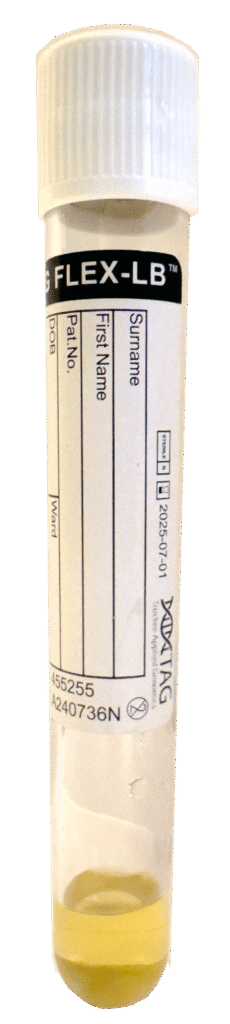
TAG FLEX-LB™ “TFLB”
A RUO Stabilizing Blood Collection Tube (BCT)
Seven-Day cfDNA and cfRNA Stability.
One Less Extraction Step.
Protect Your Science. Perfect Your Signal.
TAG FLEX-LB™ is a research-use 10 mL blood collection tube that stabilizes cell-free DNA and cell-free RNA for up to 7 days at ambient temperature (20 to 22 °C). On TAG’s MagMAX cfDNA workflow, its plasma needs no Proteinase K digestion. New for 2026: plasma protein, cellular gDNA and flow cytometry data from the same tube.
The Pre-Analytical Challenge: A Tube for Samples That Wait or Travel
Sample degradation begins at collection. Lysing white cells add genomic DNA and red cells add RNA that bury the cell-free signal, causing irreproducible results and assay failure. TFLB does not need the 2- to 4-hour processing window that K2EDTA requires (Leest 2024), so samples drawn late in the day or before a weekend can wait for the next scheduled run.
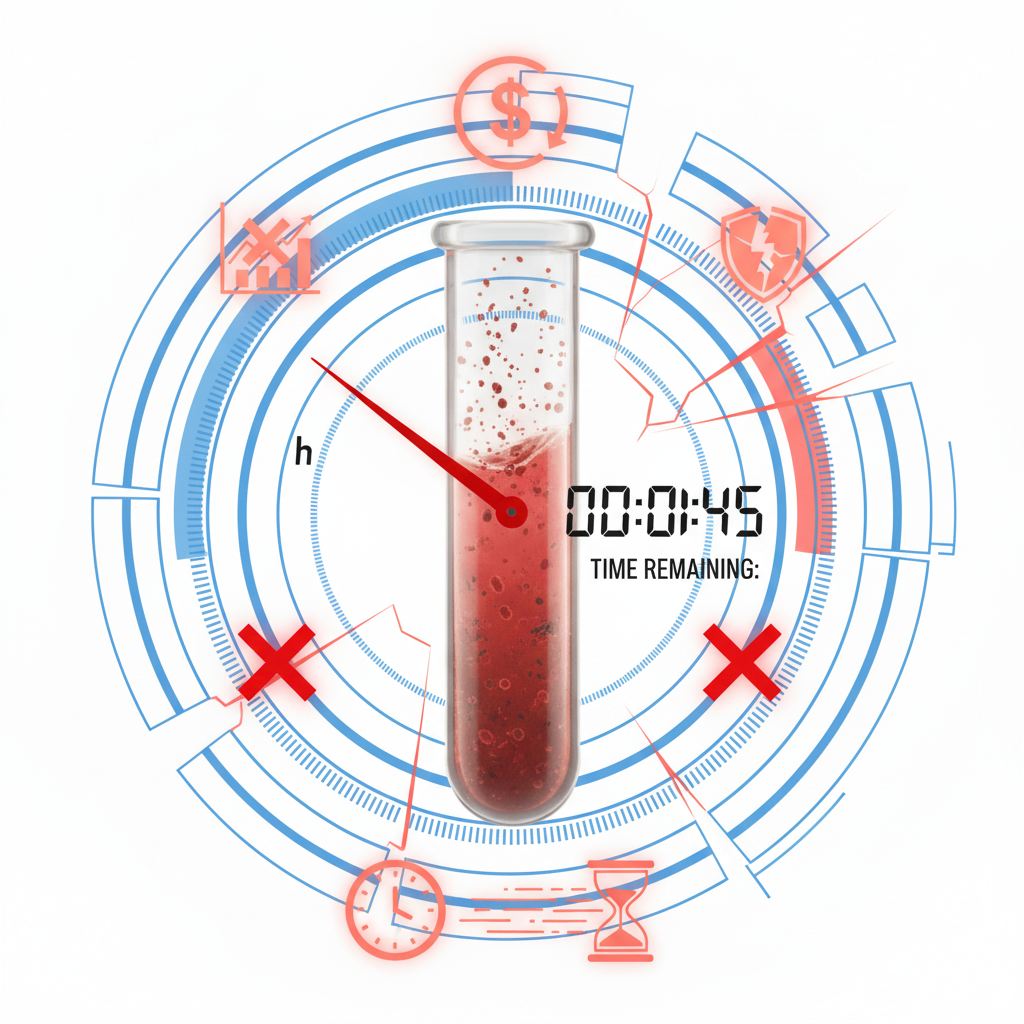
Sample Integrity, From Collection to Analysis: 7 Days at Ambient Temperature
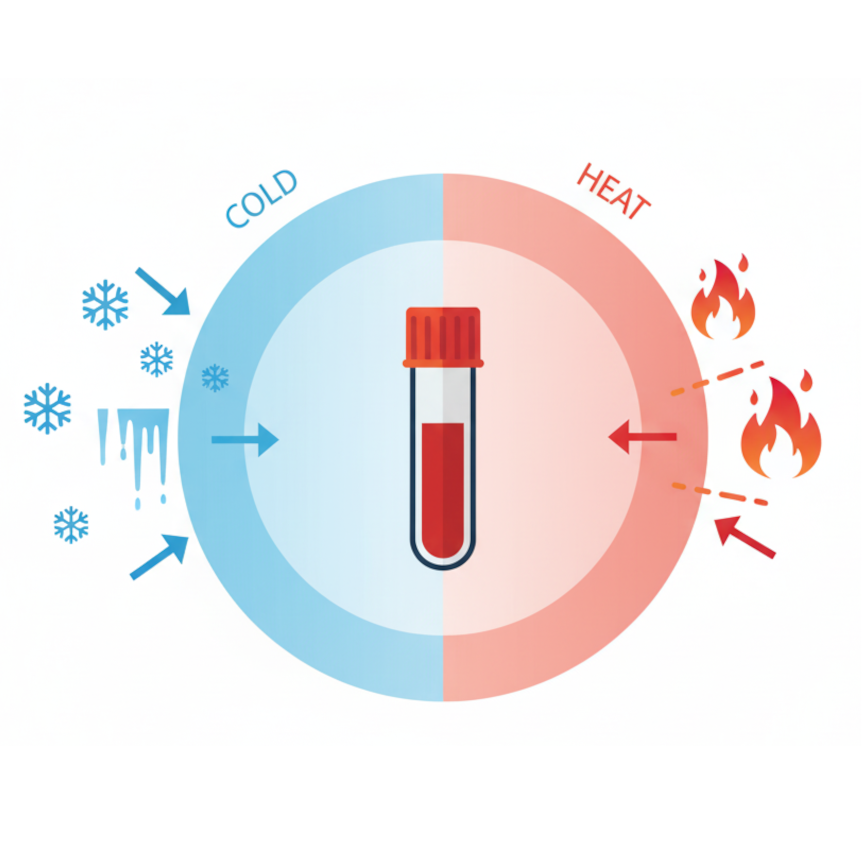
Room-Temperature Stability
cfDNA and cfRNA stable for 7 days at 20 to 22 °C. Total RNA still sufficient for RT-qPCR after 12 hours at 37 °C (two donors).
No Genomic DNA Rise Over 7 Days
Total plasma DNA in TFLB stayed under 5 ng/mL through Day 7, against about 180 ng/mL in K2EDTA, where lysing white cells release genomic DNA. The cfDNA fraction held at 87% on Days 3 and 5, while K2EDTA fell to 22% by Day 3 (two donors, no statistical testing).
Skip the Proteinase K Step
One 20-minute, 60 °C incubation and $2.30 to $3.25 of enzyme per sample removed from the MagMAX Cell-Free DNA Isolation Kit workflow, compared with Streck Cell-Free DNA BCT (Thermo Fisher MAN0014327).
Engineered for the Real World. Tested on Sensitive Assays.
Performance Across Real-World Temperatures
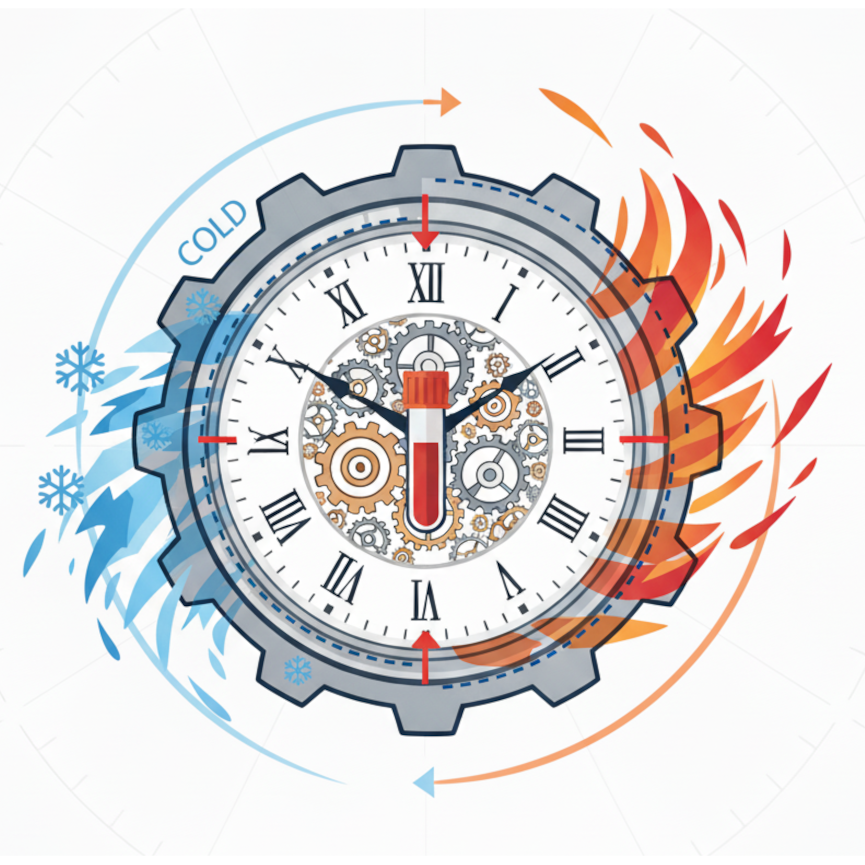
- Heat Stress (37 °C): After 12 hours at 37 °C, TFLB total RNA remained sufficient for RT-qPCR at 31 ng/uL, and supported HSP70 RT-qPCR through 12 hours.
- Cold Excursions (4 °C): Ice packs can cool tubes to about 4 °C, below the 6 °C minimum on Streck’s cfDNA tube label. After 6 days at 4 °C, TFLB plasma showed a slight red tint and Streck plasma a strong one. Plasma DNA yield reached about 3.8 ng per mL of plasma in TFLB, against 6.5 and 8.0 in the Streck tubes.
New in 2026: Protein, Genomic DNA and Flow Cytometry
- Plasma TGF-β1: At 21 to 22 °C, TFLB limited the ex vivo rise of plasma TGF-β1 to about one seventh of the K2EDTA rise by Day 4 and held it near 4,600 to 5,900 pg/mL from Day 2 to Day 6, the lowest of the three tubes at every timepoint.
- Genomic DNA From the Same Tube: Matched blood-cell DNA can support germline filtering and variant interpretation in ctDNA research. gDNA from the cell fraction of TFLB blood stayed recoverable and high molecular weight through Day 7 (DIN 8.5 to 9.4). With the same extraction, and no added decrosslinking step, extractable gDNA from Streck cfDNA and Nucleic Acid BCTs fell by about 90% between Day 3 and Day 5.
- CD45+ Events at 48 Hours: In exploratory flow cytometry after density-gradient isolation, CD45+ live events at 48 hours comprised about 12% of acquired events in TFLB, 8% in K2EDTA and under 1% in Streck Nucleic Acid Plus BCT.
Tested in Next-Generation Sequencing (NGS)
- Variants Detected Through Day 7: Spiked synthetic EGFR G719S and PIK3CA H1047R, from a reference standard with nominal 5% allele frequency, were detected in TFLB at every timepoint through Day 7 in both donors on the Illumina TruSight Tumor 15 panel.
- More PIK3CA Coverage at Day 7: TFLB held 13,000 to 18,000 reads over the PIK3CA H1047R amplicon at Day 7, against 7,000 to 12,000 in the Streck tubes. EGFR G719S coverage did not decline.
Cell-Free RNA Over 7 Days
- A Steadier miRNA Ratio: The miRNA share of small RNA in TFLB stayed within a 12-point band over 7 days at ambient temperature, the narrowest of the three tubes tested, with the tightest replicate spread.
- Lowest Red-Cell Marker miR-16 Signal: TFLB had the highest Ct, meaning the least miR-16, of the three tubes at every timepoint.
Results at a Glance
| Measure | TFLB | Streck BCTs | K2EDTA | Figure, n |
|---|---|---|---|---|
| Plasma volume, from 2 mL blood, ambient, 7 days | 1.0 mL at every timepoint | 1.0 mL at every timepoint (cfDNA BCT, Nucleic Acid BCT) | Not tested | Fig 1, n = 1 |
| cfDNA fraction, ambient, 7 days | About 90% at draw; 87% Days 3 and 5; 74% Day 7 | 70 to 80% on Day 7 (cfDNA BCT, Nucleic Acid BCT) | 22% by Day 3 | Fig 2B, n = 2 |
| miRNA share of small RNA, ambient, 7 days | 34 to 46% | 40 to 62% (RNA Complete); 32 to 48% (Nucleic Acid) | Not tested | Fig 3B, n = 2 |
| Plasma appearance, 4 °C, Day 6 | Slight color change | Red tint; held below the 6 °C label minimum | Not tested | Fig 4B, n = 2 |
| Total RNA, 37 °C, 12 h | 31 ng/uL; enough for RT-qPCR | 6.5 and 7.2 ng/uL with a silica-column kit, without Proteinase K | Not tested | Fig 8B, n = 2 |
| Spiked EGFR G719S, PIK3CA H1047R, 7 days | Detected through Day 7 | Detected through Day 7 | Not tested | Fig 11, n = 2 |
| PIK3CA amplicon coverage, Day 7 | 13,000 to 18,000 reads | 7,000 to 12,000 reads | Not tested | Fig 12, n = 2 |
| Plasma TGF-β1, Day 4 (rise from Day 0) | About 5,000 pg/mL (+3,500) | About 7,600 pg/mL (+700), Nucleic Acid Plus BCT | About 28,600 pg/mL (+26,000) | Fig 13, n = 2 |
| Cellular gDNA, ambient, Day 7 | DIN 8.7 to 8.8; recoverable | About 90% less extractable after Day 3, same extraction | Not tested | Fig 17, n = 2 |
| CD45+ live (% of events), 48 h, exploratory | About 12% | Under 1% (Nucleic Acid Plus BCT) | About 8% | Fig 16, n = 2 |
| Proteinase K step, MagMAX cfDNA kit | Not required | Required for cfDNA BCT and Nucleic Acid BCT (20 min, 60 °C) | Not tested | MAN0014327 |
Adapted from Table 1 and Figures 1, 16 and 17 of the TFLB Technical Note, November 2026. TAG R&D feasibility comparisons; n = healthy donors, no statistical testing. For Research Use Only.
The TFLB Advantage for Your Laboratory
For Liquid Biopsy Researchers
Collect at distributed sites and process on your schedule, with cfDNA, cfRNA and total RNA recoverable from one tube.
For Assay Developers
You have the assay, we have the tubes. TAG draws and processes matched blood to your timepoints and you run it in your own lab, with the study scope and terms agreed in advance.
For CLIA Lab Directors
Remove one 60 °C incubation per cfDNA run on the MagMAX kit and the Proteinase K reagent that goes with it. TFLB lists at $400.00 for 50 tubes ($8.00 per tube).
Try TFLB Beside Your Current Tube
Request an evaluation kit or a call with TAG scientists: tflb@tagreagents.com | +1 775 237 8799. Download the two-page Highlights (PDF).
Meet TAG at AMP 2026 in Seattle: poster ST157, Saturday 14 November, 9:15 to 10:15.
For Research Use Only. Not for use in diagnostic procedures.
We develop patented reagents to improve molecular tests of solid tissues, blood, and pathogens while supporting industry standard pathology protocols and high throughput lab systems.
ABOUT TRUCKEE APPLIED GENOMICS
TAG develops reagents to improve molecular diagnostics sample quality to accelerate the growth and promise of precision medicine.
TAG's proprietary sample storage and transport reagents are designed to optimize molecular assays with a wide range of applications such as next-generation sequencing, RT-PCR, immunoassays, liquid biopsies, and single cell and spatial genomics.
contact us at +1.775.237.8799, or email info@tagreagents.com.

Let’s discuss your
molecular testing
reagent needs.
Truckee Applied Genomics, Inc.
email: info@tagreagents.com
call or text: +1 775.237.8799
Located in the beautiful Tahoe / Reno region. Close to Bay Area tech resources, yet offering an outstanding quality of life.
275 Hill Street - Suite 290, Reno, NV 89501

